

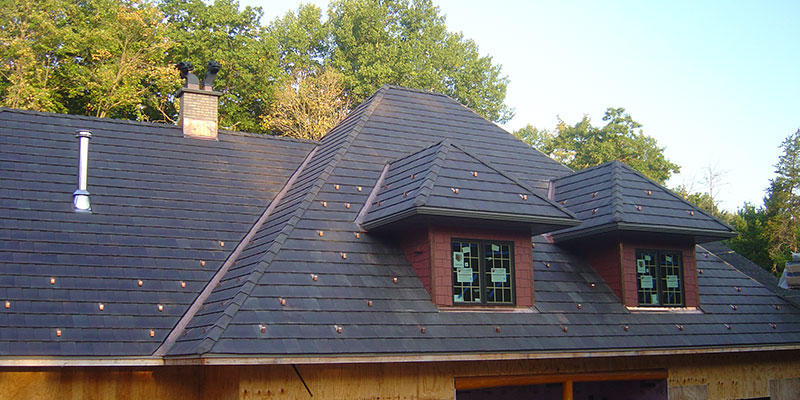
Wisconsin winters bring heavy snow, ice, and high winds, all of which put stress on a roof. Slate and clay tile are among the most durable roofing materials available, yet they still need proper care. Our team has installed and maintained slate tile roofing and clay tile roofs throughout Wisconsin for years. Read on to learn how winter affects these roofs and how to protect yours this season!
Built for Wisconsin Weather
Clay and concrete tile roofs are designed to withstand extreme weather. This durability makes them well suited to Wisconsin’s climate.
A clay tile roof offers several advantages during the winter months:
- Concrete tiles are durable enough to support snow loads.
- Tile does not fade, curl, or rot.
- High winds will not lift tile roofing.
- Tile roofs are resistant to hail damage.
- Tile provides excellent insulation, helping keep homes warmer in winter.
Concrete tile also features a natural water-shedding and ventilation design. This allows tile to serve as the primary roof covering in both warm and cold climates.
Slate offers comparable strength. Natural slate tiles resist deterioration regardless of climate conditions and are completely fireproof. A properly installed slate roof can last a century or more.
Common Winter Trouble Spots
Slate and clay tile tolerate cold temperatures well. Problems usually start in the components surrounding the roofing material.
Ice Dams
Ice dams are a familiar sight on Midwest homes each winter. The University of Minnesota Extension describes an ice dam as a ridge of ice that forms along a roof’s edge. This ridge keeps melting snow from draining off the roof. The trapped water can then leak inside and damage walls, ceilings, and insulation. Over time, that moisture can also lead to mold growth.
Flashing and Gutters
Gutters, valleys, and flashings are more likely to cause leaks than the slates themselves. Slate is durable enough that metal flashings often fail before it does. Even a small hole can allow significant water into the home. Fall gutter cleaning is an important step before snow arrives.
Damaged or Missing Slates
Slate contains natural hairline cracks and imperfections. Over time, these can develop into broken or cracked slates. A single broken or missing slate is enough to cause a roof leak. Addressing minor issues before winter helps prevent more extensive damage.
Aging slate requires extra attention. As slate wears down, it can begin to separate into layers and hold moisture. This trapped moisture may cause the rafters and sheathing beneath the roof to rot.
Winter Roof Maintenance Tips
Preventive maintenance is the most effective way to protect a slate or clay tile roof. Consider the following steps this season:
- Schedule an annual inspection. A slate and tile roofing specialist should inspect your roof once a year.
- Keep gutters clear. Clean gutters and downspouts allow water to drain properly.
- Address damage promptly. Replacing broken tiles or slates quickly helps prevent water damage and accelerated wear on the roof and sheathing.
- Inspect the attic. Check the attic and living areas for signs of leaks or moisture.
Why Installation Matters
Proper installation is the foundation of a long-lasting slate or clay tile roof. Improper installation is the leading cause of slate roof problems. Tile roofs also rely on correct installation to resist high winds and keep maintenance minimal. When hiring a slate or tile roofing contractor, ask about their experience.
Our crews are trained in the craftsmanship of hard roof systems. Van De Hey Refined Roofing is fully insured and bonded, asbestos certified, and licensed in Wisconsin and Illinois.
Contact Us
Looking for trusted slate and clay tile roofing specialists? We serve Appleton, the Fox Cities, Green Bay, De Pere, Oshkosh, Sheboygan, Milwaukee, Waukesha, Madison, Verona, and nearby areas.
Contact us at 920-532-4631 to schedule a roof inspection or maintenance visit. Protect your slate or clay tile roof before winter arrives!


 4065 Old Car Ct De Pere, WI 54115
Leave a Reply
You must be logged in to post a comment.